
We're an affiliate
We hope you love the products we recommend! Just so you know, we may collect a share of sales or other compensation from the links on this page. Thank you if you use our links, we really appreciate it!
The benefits of therapy dogs are limitless and continue to play an important role in most lives.
- Providing independence and freedoms that would not be possible without their help.
- Stress reduction and security in ways only a dog could provide.
- Assistance with essential tasks.
- Great for those who have a visual or hearing impairment.
They’re simply amazing animals and certainly deserve the credit. Let’s take a look at how these remarkable creatures are helping people.
Table of Contents
Reduction of Stress
Dogs are well known for being natural stress reducers. They can provide us with lots of help in this area, even when we don’t realize it.
Here’s how:
- Exercise – Taking your dog for a walk, or maybe going for a run on the track. This is a natural stress reducer and can provide some unintentional health benefits at the same time.
The lack of exercise is a major contributor to physical and mental health. Taking your dog for a walk can help reduce depression, contribute to getting your circulation moving, and may reduce some anxiety.
Try to get in the habit of doing things with your dog outside. Not only will it help you, but this will also contribute to your dog staying healthy and strong.
Security
These canines are excellent guardians and provide a great deal of support in this area. They continue to help us in this area, which gives us that extra layer of support that we need.
Some of the ways they provide security are:
- Home security – This is probably one of the top reasons everyone is familiar with. They’re your security system, that will make noise at the first sign of anything suspicious.
- Airports – These dogs will try to prevent people from trying to smuggle contraband, and to stop someone from bringing anything that can potentially harm someone.
- Public Events – Unfortunately there are people out there with bad intentions, and having something that can react quickly is essential, and could prevent it from developing into something much worse.
- Police – Dogs are used in the police departments throughout the globe, and continue to be an excellent deterrent for those who are looking to cause trouble. They also help find people, locate drugs, and provide assistance in several essential tasks.
These are great examples of how dogs help us, but they do much more than this. Let’s take a look at some of the other things they do for everyone.
Companion
This would be the number one reason most people would get a dog. They will provide you with companionship throughout their whole life.
Here’s how they can help:
- Keeping You Motivated – Dog’s will always remind you when you need to feed them, let them outside, or if they want to play with you.
- Squashes Loneliness – It can be tough living on your own, or maybe your family is gone for a while. A loss of a loved one or even a divorce can have you feeling like you are alone. Your canine friend can help with any problems feeling isolated.
If you are not someone who interacts with many people or just doesn’t have the time to, then a dog might be the solution you’re looking for.
Having a sense of purpose can be a very uplifting feeling, which will seamlessly be provided by having a loyal companion around. Dog’s can also be a great way to meet other people while out walking.
This list is for therapy dogs but may also help when choosing a service dog. Below this list of breeds, you will also find out about more ways these dogs help everyone.
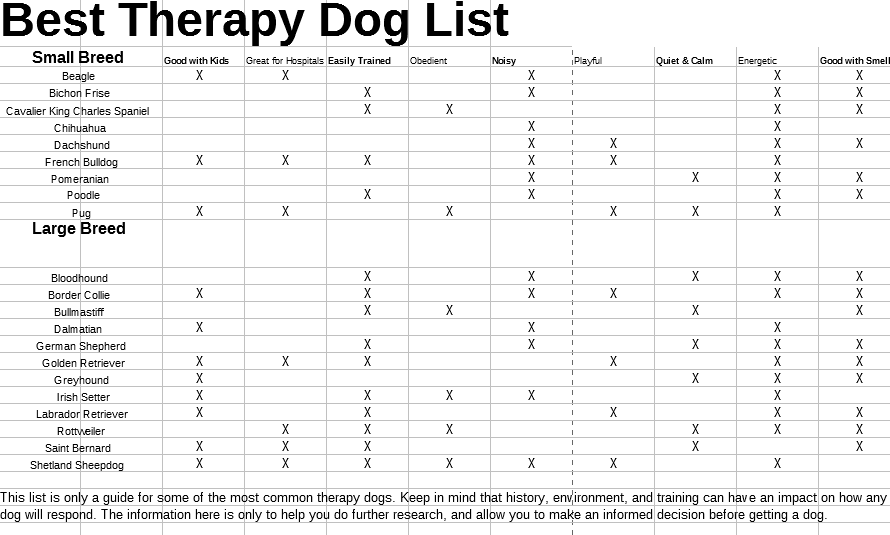
Here’s some info on a few of the breeds listed above
Beagle – The little guy is a favorite for many people and for good reason. Beagle is a good choice for a therapy dog. They are great around kids and have been known to do well in children’s hospitals.
A low maintenance watchdog, that also has a great temperament. Training can be a challenge, so not every dog will be the best candidate for this position.
Cavalier King Charles Spaniel – This adorable little dog can bring a smile to anyone’s face. They are gentle and enjoy pleasing others, so training them can be an ideal choice. Sensitivity training is essential to prevent them from becoming timid and fearful, but still a good choice as a therapy dog.
Dachshund – Here’s a dog you may enjoy. This energetic breed is great at encouraging people to be more active and may provide some benefit for anyone that is struggling with anxiety or depression.
Elevating spirits can be one of the things that may be seen with this dog. Limited by design, but that doesn’t stop this Dachshund from being a great addition for someone in need.
Pomeranian – This one here can be a great choice for someone that tends to stay in the same environment, or unable to leave it. They are normally calm and quiet but can be noisy when they want to be. And because they don’t need a lot of exercise, this may make them a perfect candidate for a therapy dog.
Pug – Here’s a dog that would be hard not to enjoy, which makes it a great little breed for the list of therapy dogs.
These attention-grabbing dogs with their cute facial structures can bring joy to any animal lover. Well-tempered and easy to train, which makes them a choice worth considering. This little guy doesn’t demand a lot of exercise, so spending most of your days at home will be fine.
Pugs don’t require a lot of room, so they can be ideal if you are living in a small apartment. They also get along with other pets, which means no problem there.
Bloodhound – You may be curious to know about this interesting breed, the Bloodhound has an interesting ability that makes them a great candidate for medical work.
Because of their remarkable talent to detect smells, this allows them to identify chemical changes someone may be experiencing.
These dogs do fairly well in populated areas and present themselves as mild-mannered. Not overly energetic, which can contribute to your furry friend getting a little chunky.
Bullmastiff – Some of you may be curious why this dog made it on this list. Each dog has something unique to offer, and the Bullmastiff is no exception. They have all the things needed to be a good therapy dog.
This working breed can make a great volunteer for the community. Great at following commands, and also obedient. This gentle giant is quiet and calm, but energetic when needed.
Proper training is needed, otherwise, aggression towards strangers is more likely. The Bullmastiff is prone to overindulging, so keeping it active is necessary.
German Shepherds – This breed is well known for being cautious around strangers. They have great focus, so the following commands aren’t a problem for them. While these dogs are quiet and calm, they can be noisy and destructive if left alone.
These dogs can be a great family dog, but making sure they are properly trained to be around kids is essential. They are extremely friendly, great companions, and also makes a great guard dog.
If you’re looking for an engaging, and energetic animal, then a German Shepherd might be what you are looking for.
Greyhound – Here’s a dog that is well known to traditionally being used as a racing dog. If trained properly, this breed can do very well.
Good with kids, and you can normally expect this dog to be quiet and calm, which makes it a good choice for being a therapy dog. They are energetic, and because of their speed and size, a tall fence would be recommended.
Labrador Retriever – This is a dog that can easily be trained. They are highly intelligent and enjoy learning new tricks. A friendly attitude, and can be easily trained, so naturally, they would make it on the list of best therapy dogs.
These breeds are playful and energetic and would make a great addition to anyone’s family. Training should be adopted at an early age.
More Ways These Dogs Help Everyone
Autism Assisted Dog’s
Dogs can be trained for a wide number of tasks and can be very beneficial for children with autism. Below are a few reasons how these animals are trying to assist.
This is how:
- Locating – Autistic children tend to find a way to wander off, even if it was a secured location. They don’t always understand the potential dangers, and might not respond to their names being called, which can be very concerning for any parent.
The powerful nose of a dog can be of great help when trying to find a child and can be of great assistance with bringing the parent to the wandering and misguided child.
- Sensory Support – A dog resting its head on an autistic child can be a great way to help reduce anxiety.
- A good Friend – Emotional support can go a long way, and a dog can be of great assistance in this area. They can also provide nonjudgmental friendship for those difficult days.
- Game Player – Dog’s make the perfect choice when looking for someone to play a game with. They won’t care about the rules you make, or if you are even playing fair.
- Calming Meltdowns – During a meltdown dogs are taught to respond to a child, they will lick and touch them to provide a calming effect.
- Sleeping – Autistic children can have problems sleeping by themselves, but having a dog can make it much easier for them to relax and be comfortable with their environment.
Autism therapy dogs can provide benefits for autistic adults or children. A therapy dog will also keep a close eye on your child, which will be more likely to discourage them from wandering off.
Dog Guiding the Blind
Guide dogs generally take a minimum of 2 years before they can be matched with a disabled person. They must have a good temperament, otherwise, public transportation, shopping, or any other daily activities can become a problem. Service dog training includes basic obedience and must be able to keep its companion safe.
This is a great option for the blind. This will allow some people a little more independence and give them back some freedom.
Mobility Assistance Dogs
The tasks are almost limitless on what Mobility assistance dogs can do. This is another great area where they’re providing tremendous value to those that are in need.
Here are some of the things they can help with:
- Picking up Items – If you have any type of mobility issue, then you know that it can be extremely difficult to pick anything up off the floor. If you drop something you might not even be able to grab it, so it will end up staying there. A trained dog can help with this, and easily be able to pick up the item for you.
- Stabilizing – Some people are capable of walking but have some type of balance issue. Their dog can provide support for those who have balance problems.
- Pushing Buttons – This might be a problem for someone for a variety of reasons. Maybe the button is hard to reach, or the door is too heavy to pull. This is where your canine friend will come in handy and will be able to effortlessly press the button.
They can certainly make life much easier for anyone struggling with these issues.
Military Service Dogs
Military service dogs for therapy receive customized and extensive training, which allows them to help a wide variety of people, and can be customized to help their owner’s specific needs.
Here’s one use and how they can help – Service dogs can provide benefits to military veterans suffering from post-traumatic stress disorder(PTSD).
This can improve the quality of life for someone who has depression or PTSD. They help the veteran realize that they are in a safe environment and that there is no danger present.
Seizure Response Dog
These dogs can be of tremendous help in this area and may provide the support you can only get from a companion like this.
This is what they can do:
- Activate Alarm – If someone is experiencing an epileptic seizure, these dogs can press an alarm button.
- Retrieve Medicine – They can grab their medicine for them, so they can take it once they are capable.
- Move to Safer Place – A seizure response dog may recognize a seizure taking place, which may prompt him and attempt to move you to a safer location.
There’s no question that a dog trained in this area can provide essential help quickly, and reduce the likelihood of something much worse happening. Helpful and preventative are very valuable in situations like these.
Search and Rescue Dogs
There may be times when locating someone is a top priority, and a rescue dog may be what you are looking for. Their remarkable ability for detecting smells and sounds makes this the perfect job for them.
Ways they Help:
- Cadaver location – Finding a body can be a difficult task, especially if it’s during the night, or in an area that is difficult to travel in. Dog’s can provide a tremendous benefit in this area, and help identify what they are looking for much quicker.
- Avalanche – When time is not on your side, you need any help you can get. These dogs can mean the difference between life and death. A trained rescue dog will be able to identify any sound or smell quickly and alert the rescue team into action.
Hearing Dog
A hearing impairment can provide its own set of problems and can make life a little more challenging. A hearing dog is a great way to help with this issue, and we’ll take a look at what they can do.
- Doorbell Ringing – Maybe something was ordered from Amazon, and there’s a package expected to arrive anytime. A dog can let the owner know about someone ringing the doorbell, and may prevent someone from trying to deliver the same package multiple times.
- Crying Baby – This could be concerning if someone had a baby, but had no way of knowing if something was wrong. A dog trained to listen for the sounds of a baby in distress can notify the owner that there may be something wrong.
- Fire Alarm – Maybe the owner is asleep, or possibly working on something in the house. Unaware, or distracted from the potential disaster that may be present. When time is a factor, being alerted quickly may be the only thing that saves someone’s life. Hearing dogs can wake up the owner to warn them something is wrong, or catch their attention when they are preoccupied.
- Confidence – A hearing dog can provide you with the independence you need, and give you the courage to face the outside world. Some things may seem easier, and you might be more likely to attempt something with the help of your trained furry friend.
Conclusion
I hope this helped you have a better understanding of how therapy and service dogs can help a wide variety of people. I also tried to give you a better understanding of which breed is best for certain things.
Every dog is unique, and provides its benefit to someone, so careful consideration needs to be taken.
I hope you found this informative, and encourage you to check out more of our articles at everythingbigdogs.com

